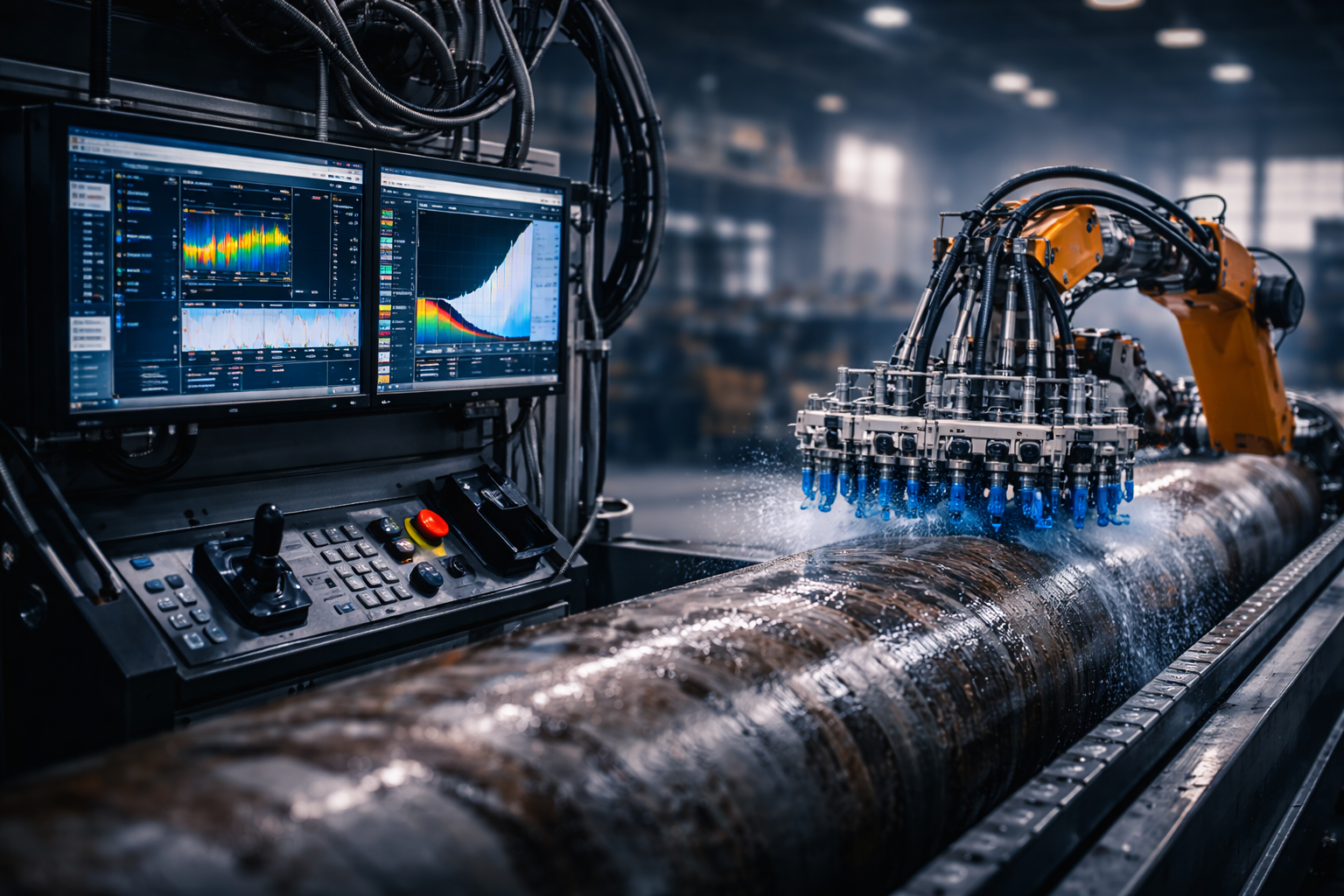
Robotic Fluorescent & Penetrant Inspection
Robotic Fluorescent Penetrant Inspection
Automated FPI Systems
Surface Crack Detection Systems
Aerospace Penetrant Inspection
Automated Liquid Penetrant Testing
Robotic NDT Inspection
Industrial Surface Inspection
The Human Factor Is the Weakest Link in Penetrant Inspection
Fluorescent penetrant inspection (FPI) is one of the most widely used surface inspection methods for detecting cracks, porosity, laps, seams and other open-to-surface discontinuities in critical components. While highly effective, traditional manual penetrant inspection processes depend heavily on operator consistency at every stage of the inspection workflow.
Variability in penetrant application, dwell time, washing, developer coverage and UV inspection conditions can significantly influence detection reliability. Altair Systems robotic FPI platforms automate the entire penetrant inspection process, ensuring every process parameter is controlled, monitored and documented for each component inspected.
By combining robotic handling, automated process control and digital indication analysis, these systems deliver repeatable inspection performance and significantly improved probability of detection across production environments.
Automated FPI Process Stages
- Pre-Cleaning – Automated cleaning stations remove contaminants that may block penetrant entry into surface discontinuities. Process parameters such as wash pressure, temperature and duration are controlled and logged.
- Penetrant Application – Robotic spray, dip or flow-coat application of fluorescent or visible penetrant ensures uniform coverage across complex component geometries.
- Dwell Time Control – Automated timing ensures penetrant dwell periods meet the required inspection specification for every component without operator estimation.
- Emulsification – Robotic emulsifier application and dwell control for hydrophilic or lipophilic processes, ensuring consistent penetrant removal from surfaces while preserving defect indications.
- Controlled Washing – Automated wash stations regulate pressure, temperature and duration to prevent both over-washing and insufficient cleaning.
- Drying and Developer Application – Temperature-controlled drying followed by automated application of non-aqueous wet developer or dry developer for consistent indication enhancement.
- UV Inspection and Indication Analysis – Robotic UV inspection stations equipped with calibrated UV-A illumination and imaging systems capture high-resolution indication images for automated detection and operator verification.
System Configurations
- Batch Processing FPI Systems – Rack or basket loading systems designed for batch inspection of mixed components with automated transfer between inspection stages.
- Inline Conveyor FPI Systems – Fully automated inspection lines integrated directly into production environments for continuous high-throughput inspection.
- Robotic Cell FPI Systems – Multi-axis robotic cells designed for inspection of complex geometry components such as turbine blades, vanes and precision castings.
- Aerospace and NADCAP Referenced FPI Lines – Complete automated penetrant inspection lines qualified to international standards including AMS 2647, ASTM E1417, EN ISO 3452 and other aerospace process specifications.
Industries and Applications
- Aerospace and defence components including turbine blades, vanes, landing gear and structural castings
- Oil and gas components such as valve bodies, pressure housings and welded assemblies
- Power generation turbine components inspected during manufacturing and maintenance cycles
- Precision manufacturing components where surface quality and crack detection are critical
Why Automate Fluorescent Penetrant Inspection
Manual penetrant inspection processes depend heavily on human judgement, environmental conditions and operator consistency. Automated FPI systems eliminate these limitations by ensuring every inspection cycle is executed under controlled and repeatable conditions.
- Process parameters automatically controlled and logged for every inspection cycle
- Consistent dwell time, wash parameters and developer coverage
- Calibrated UV inspection environment with digital imaging
- Automated indication detection and digital record keeping
- Complete traceability with inspection reports and process logs
Why Altair Systems
Developing automated penetrant inspection systems requires more than robotic handling capability. It requires deep understanding of penetrant chemistry, surface behaviour, developer application dynamics and inspection standards.
Altair Systems integrates NDT process expertise with advanced automation engineering to deliver FPI inspection platforms that improve reliability, enhance traceability and support demanding aerospace and industrial inspection standards.