
Altair Systems integrates the full range of advanced NDT methods, multi-axis motion platforms, and unified inspection software into automated systems engineered to achieve reliable defect detection across any component geometry, material, or inspection standard.
The NDT methods, motion platforms, and software tools available to an automated inspection system integrator are a means to an end. The key engineering question is which combination of inspection methods, axis configuration, and software architecture will most reliably detect, characterise, and document the defect population relevant to the component being inspected.
Every capability listed on this page represents technologies already implemented in deployed Altair Systems inspection platforms across industrial applications.
Selected and integrated specifically for each inspection application.
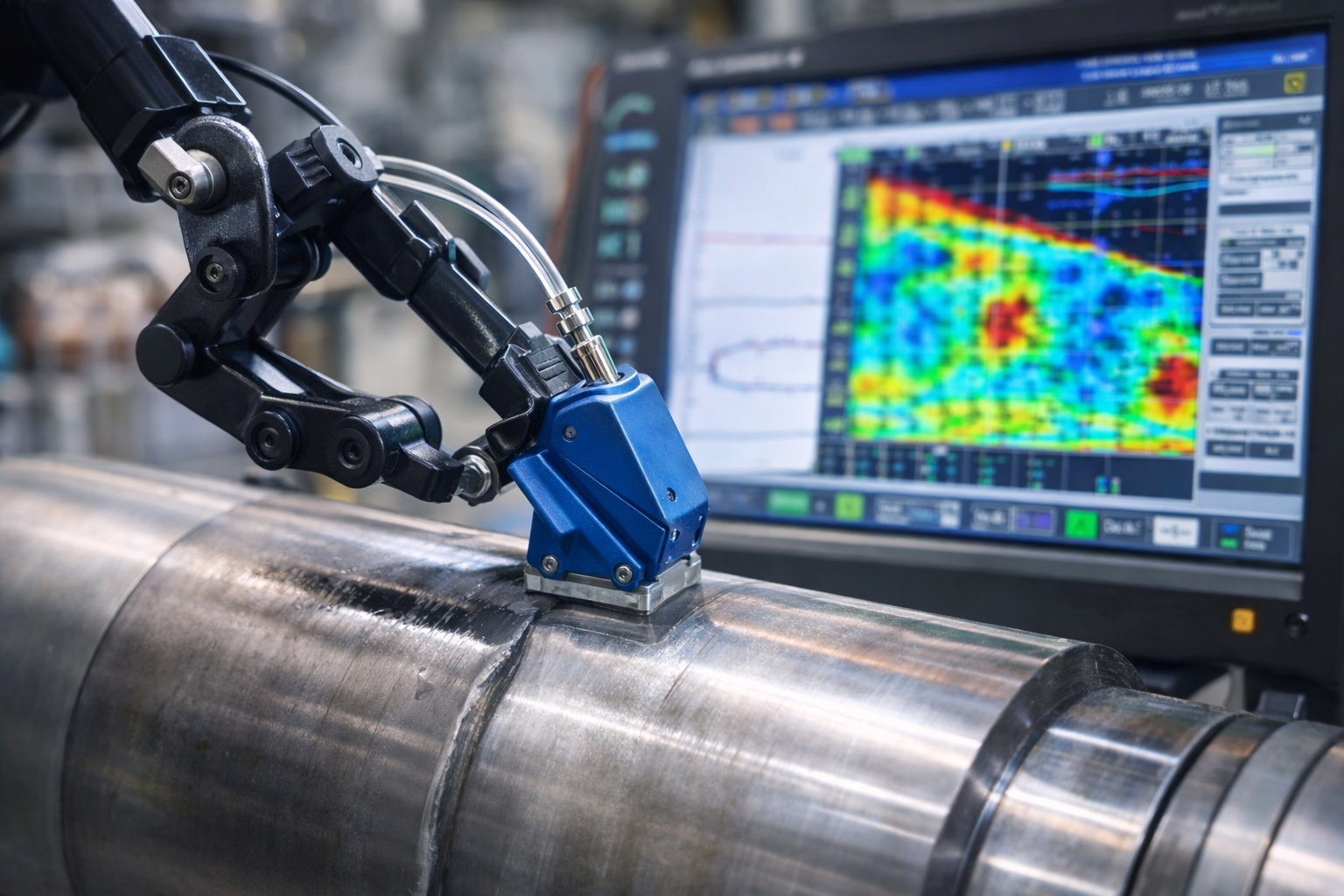
What It Is: Phased Array UT uses a multi-element transducer array in which individual elements are excited with controlled time delays — creating electronically steered and focuse...

What It Is: TOFD is a pulse-echo ultrasonic technique that uses the diffraction of ultrasonic energy at defect tips — rather than specular reflection — to detect and size planar d...

What It Is: Full Matrix Capture records the complete set of transmit-receive data from every element combination in a phased array probe. Total Focusing Method then applies a post...

What It Is: Single-element focused or broad-beam transducers operating in pulse-echo mode — the established baseline of immersion and automated contact UT. Conventional UT remains...
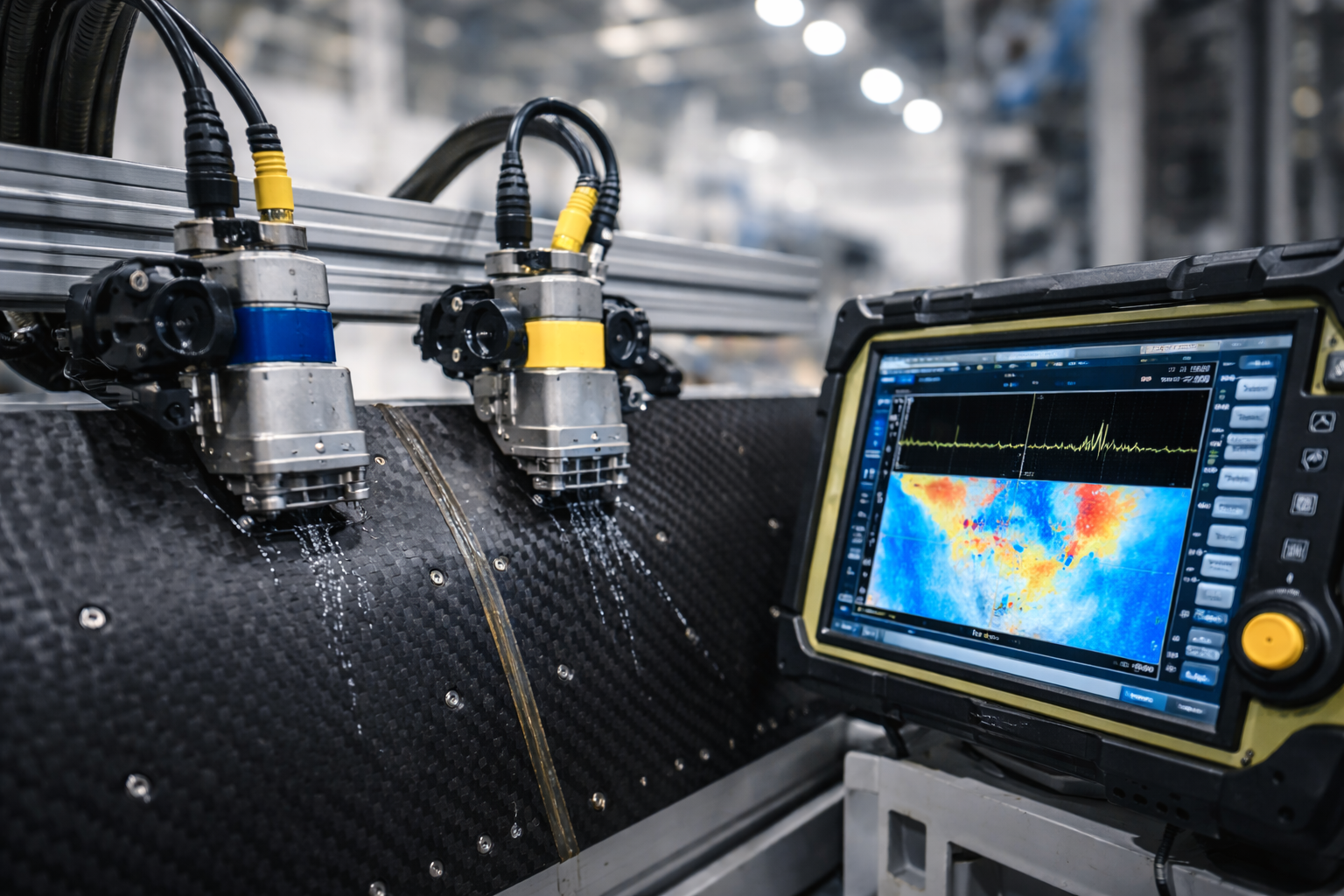
What It Is: A dual-transducer technique where separate transmitter and receiver transducers are positioned on opposite sides of the component — the transmitted signal amplitude is...
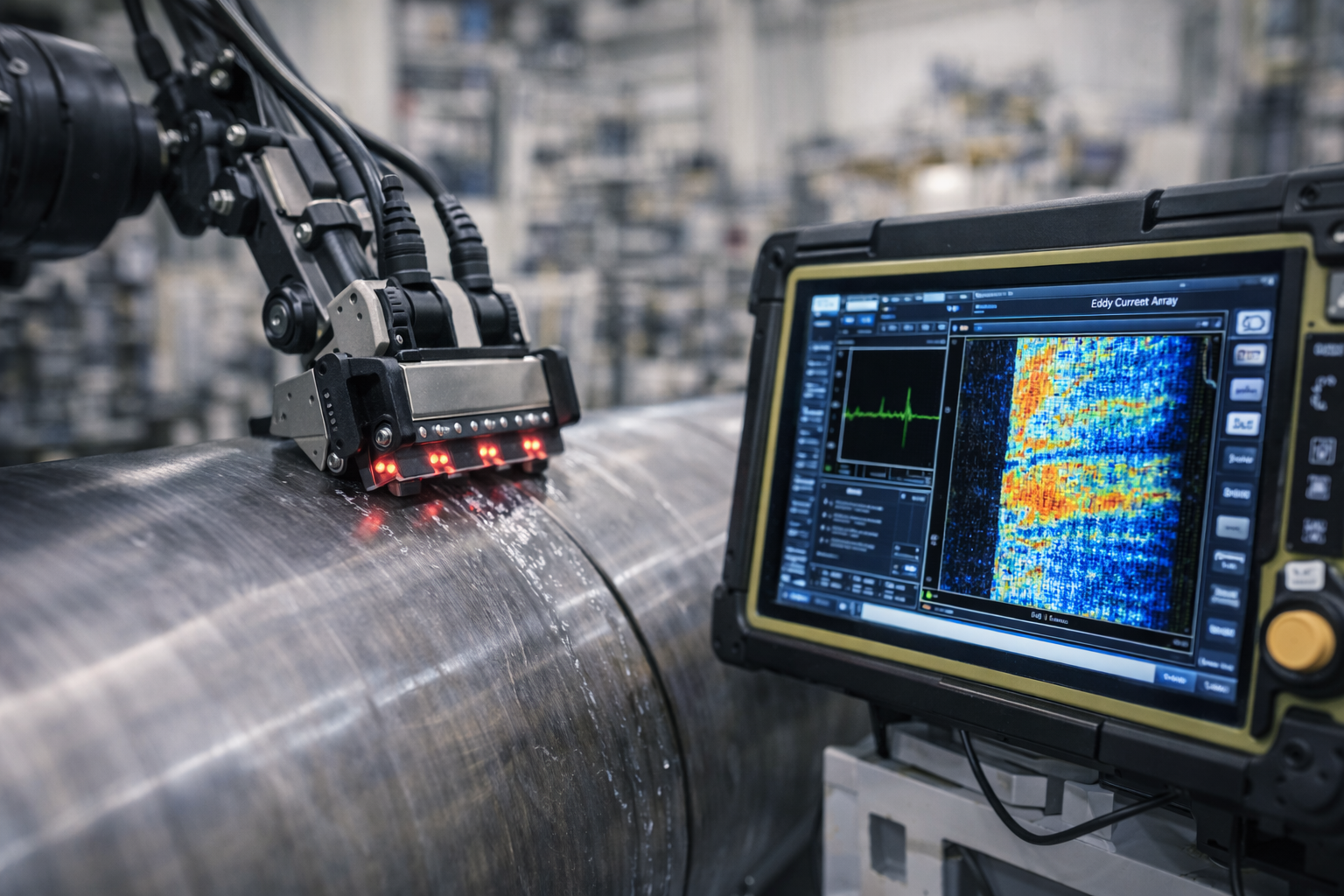
What It Is: Eddy current testing uses electromagnetic induction to detect surface and near-surface discontinuities in electrically conductive materials — without the need for coup...
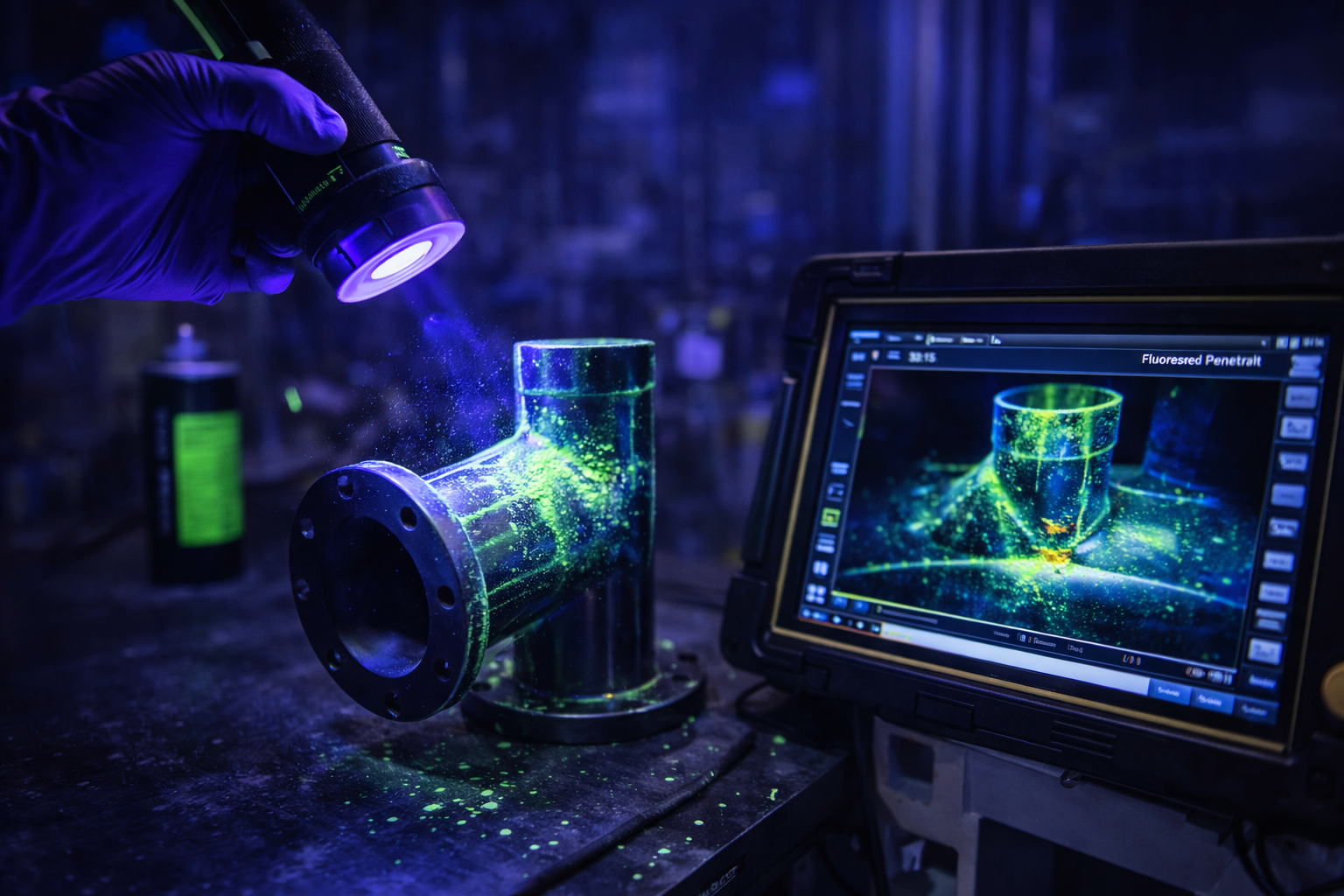
What It Is: A liquid penetrant method using fluorescent dye under UV-A illumination to reveal surface breaking discontinuities — cracks, porosity, laps, folds, and cold shuts — in...
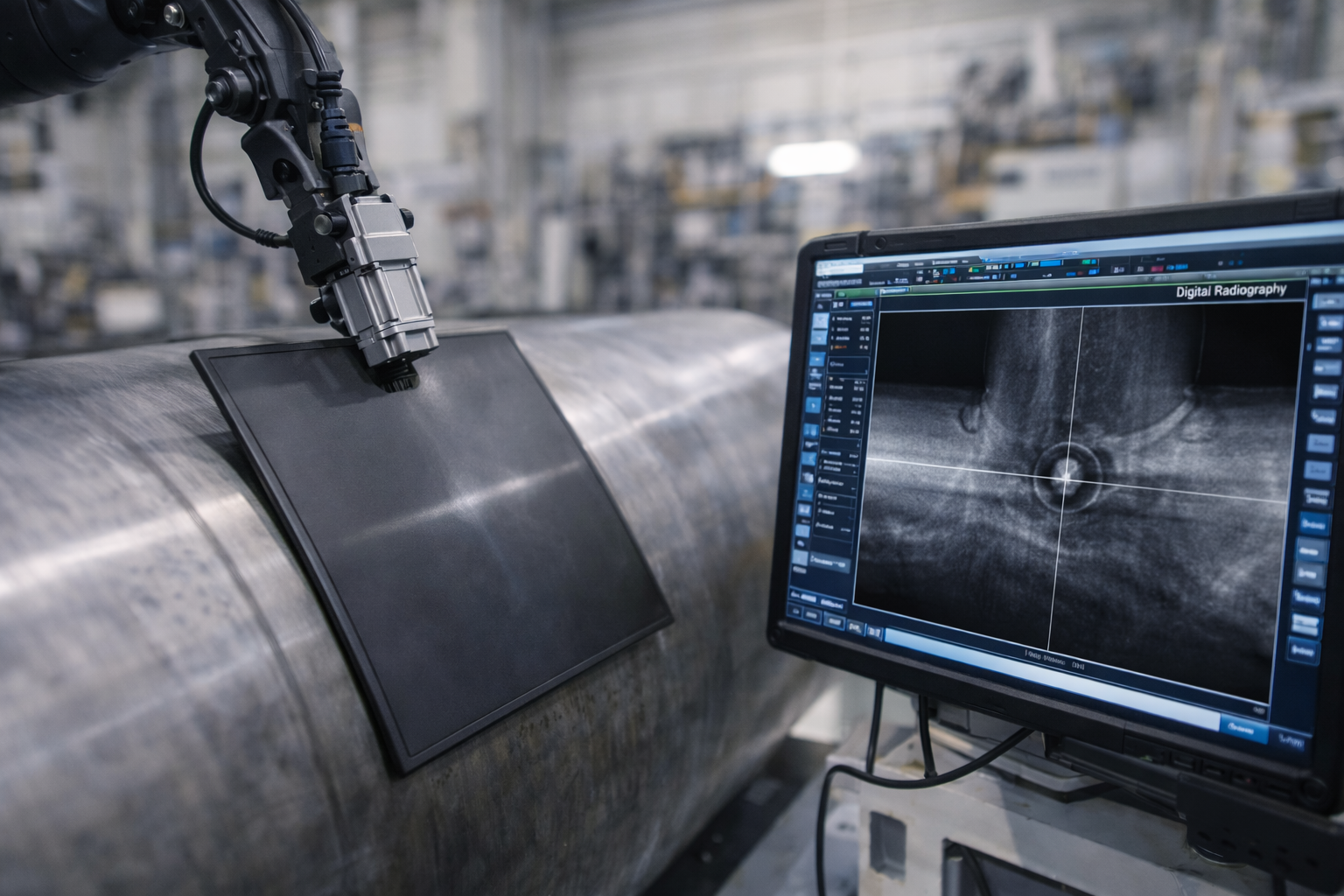
What It Is: Digital radiographic testing uses X-ray or gamma-ray sources with digital detector arrays (DDA) or computed radiography (CR) systems to image internal component struct...
Linear Cartesian scanning optimised for flat plates, composite panels and regular geometry components.
Standard configuration for immersion tank systems delivering full volumetric inspection coverage.
Linear axes with rotary axis enabling helical scan coverage for cylindrical components.
Dual rotary axes enabling probe normal incidence on complex curved surfaces.
Articulated robotic arms enabling inspection of complex geometry components.
Continuous pass-through inspection integrated directly into manufacturing production lines.
Altair Systems uses CIVA simulation software to model inspection performance before system construction. Probe configuration, beam behaviour, defect detection response and scan plans are validated digitally before commissioning.
This simulation-first approach reduces project risk, compresses commissioning timelines, and provides documented technical justification for inspection procedures.
Every automated inspection system delivered by Altair Systems is engineered under ISO 9001:2015 certified quality processes with ISO 17025 calibration traceability.